
The Atelier Bloem Journal: Amsterdam
Growing beauty is a season. Keeping it is a craft.
August 19, 2026
Arrival
I flew home this summer, to the country that taught the world to grow flowers. The Netherlands ships billions of stems a year. The auction clocks in Aalsmeer move faster than any trading floor.
And yet the longer I looked, the less the story was about growing. Everywhere I went, the flowers that defined the place were the ones built to stay.
On the walls
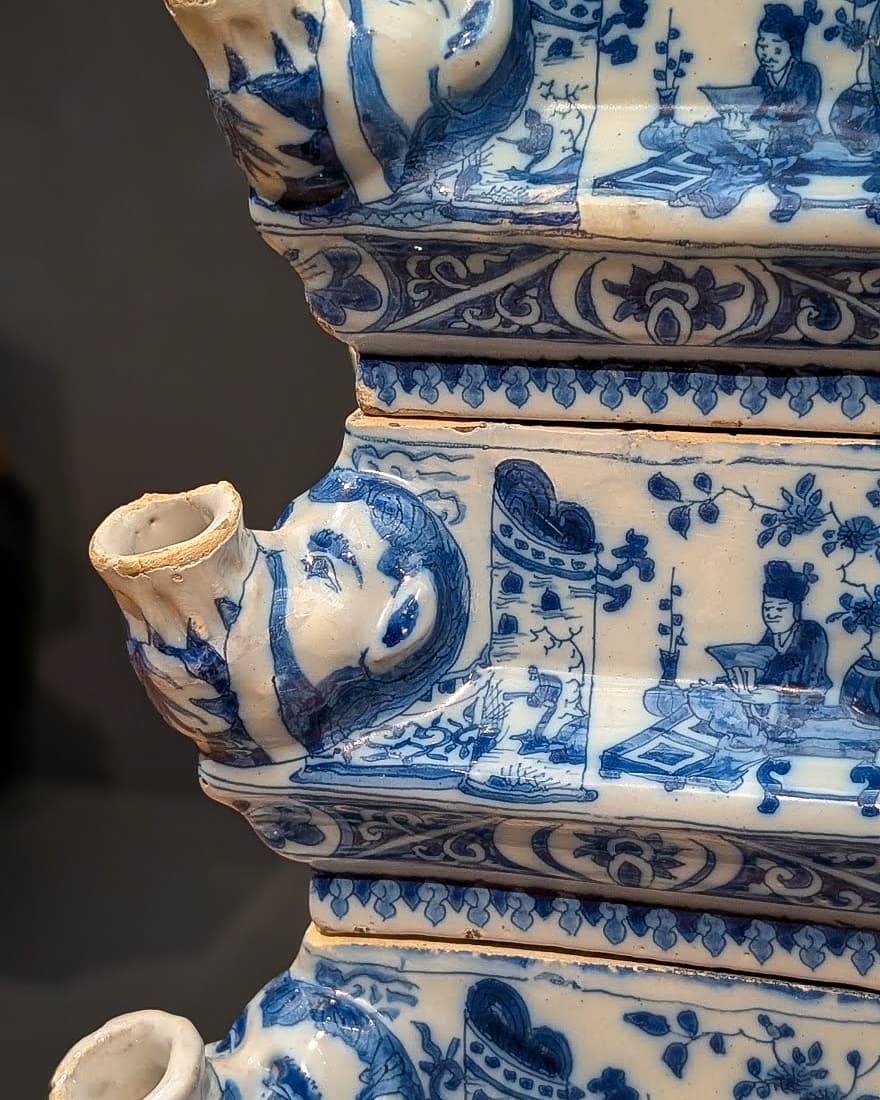
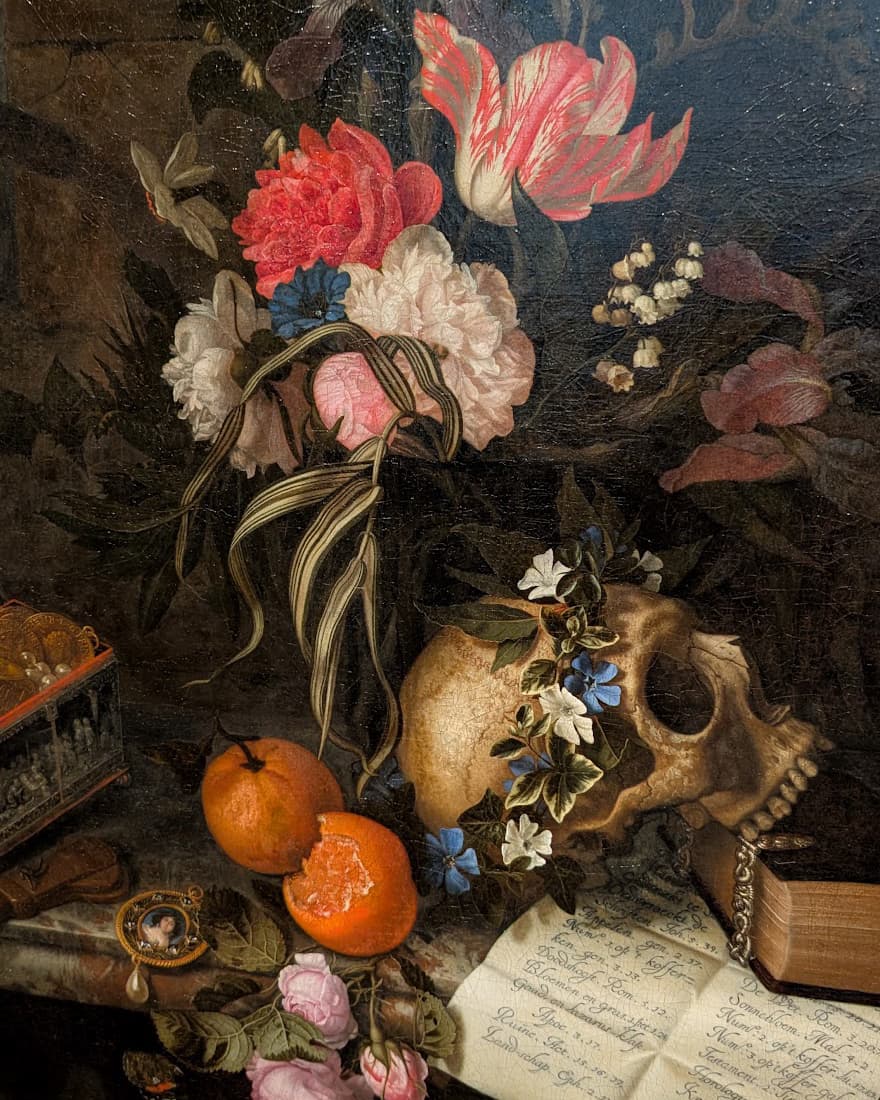
The Rijksmuseum is full of flowers that have not moved in four hundred years. Tulips in Delft pyramids. Vanitas tables where a skull sits among the roses. A still life from 1634 with a frog on the ledge, painted by Jacob Marrel, who traded tulips when he was not painting them.
The Golden Age painters worked during tulip mania, when a single bulb could cost more than a canal house. Painting the flower was the affordable way to keep it. The bulbs are gone. The paintings are still here.
Rachel Ruysch painted flowers in a glass vase for almost seventy years, from her apprenticeship at fifteen to a canvas she signed at eighty-three, and never once painted a bouquet that could have existed. Neither did Hans Bollongier. His Semper Augustus tulip sits beside blooms from three different seasons, gathered in a vase far too small to hold them. These were not records of arrangements. They were arrangements, made to specification, made to last.
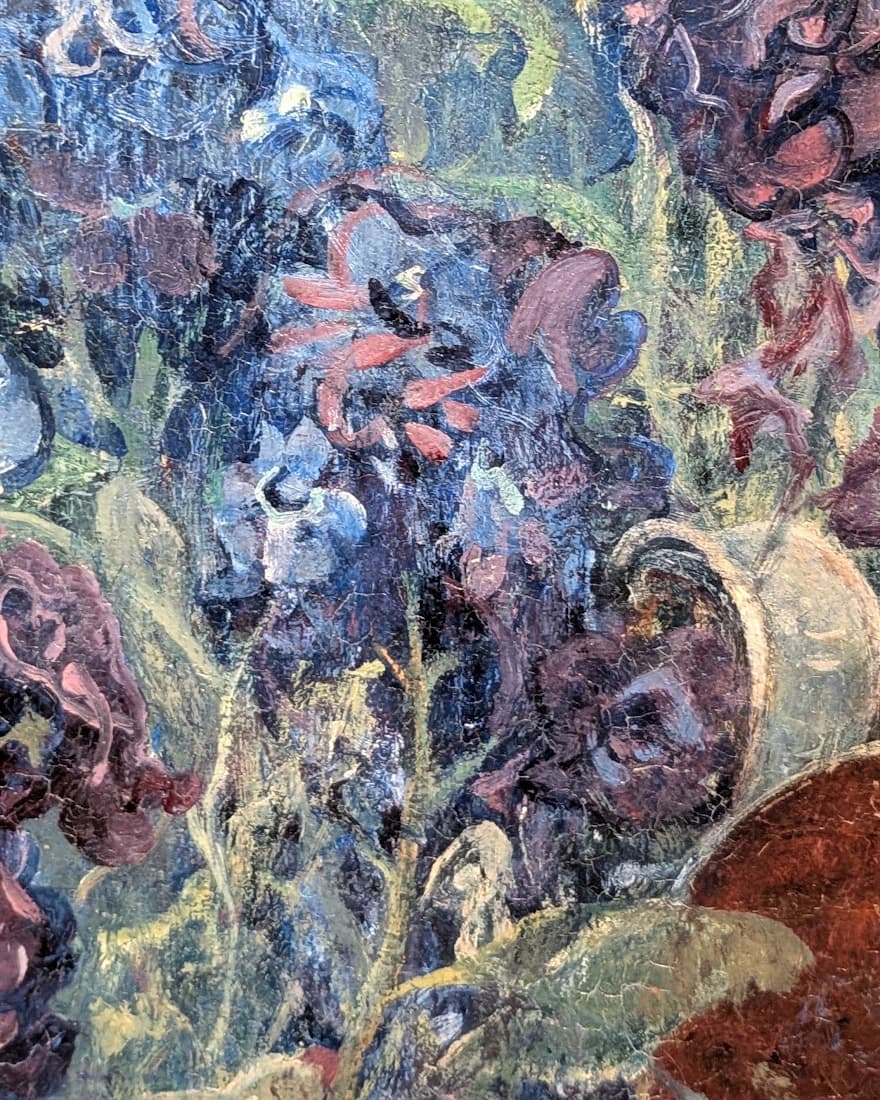
Not every flower on those walls was cut. In one room hangs July, painted around 1900 by Jacobus van Looy, blue flowers strewn across a canvas large enough to stand inside. Behind the hedge is the artist's own house at Soest. In the right foreground, an overturned pot. He painted his garden in the week it peaked. The garden had a season. The canvas is a hundred and twenty six years old and still in July.
Van Looy was working in Van Gogh's wake, and a few streets away that inheritance is easier to see.
The gift that outlived everyone
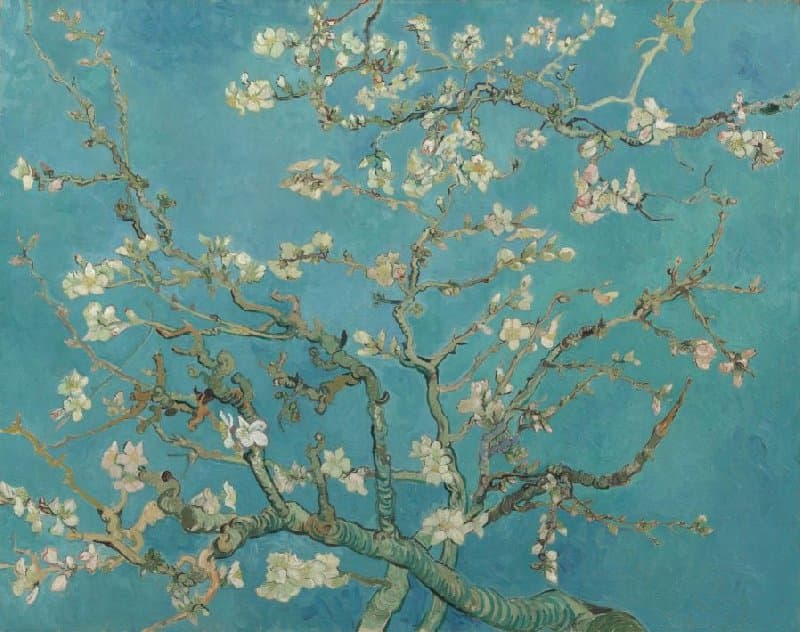
At the Van Gogh Museum, the painting people cross the world for is a branch of almond blossom on a blue sky.
Vincent painted it in 1890 for his newborn nephew, little Vincent, named after him. The family hung it above the piano. They sold other paintings over the years. Never this one. The baby it was painted for grew up and founded the museum it now hangs in.
Almond blossom lasts about ten days. The gift is 136 years old.
Two years earlier, Vincent had cut a single blossom branch and put it in a glass of water to paint before it faded. The branch lasted days.
In the pattern
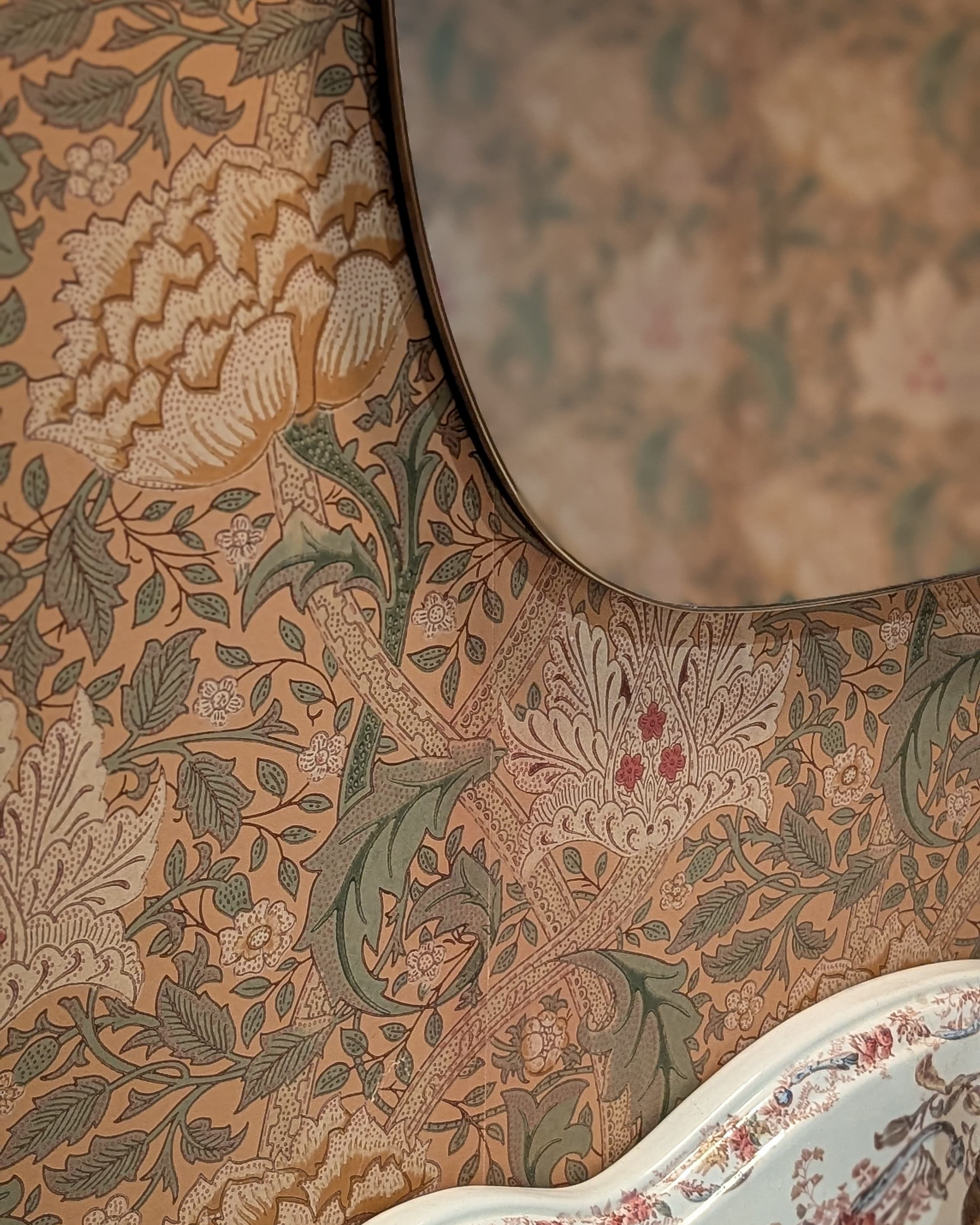
Between museums, the flowers kept appearing where nothing grows. Wallpaper in a quiet corner cafe. Textiles. Porcelain. A mirror reflecting a wall of printed blooms.
This is the part of Dutch design I carry with me: florals as a language, not a decoration. The eye that arranges a still life is the same eye that repeats a peony across a wall.
Through the windows
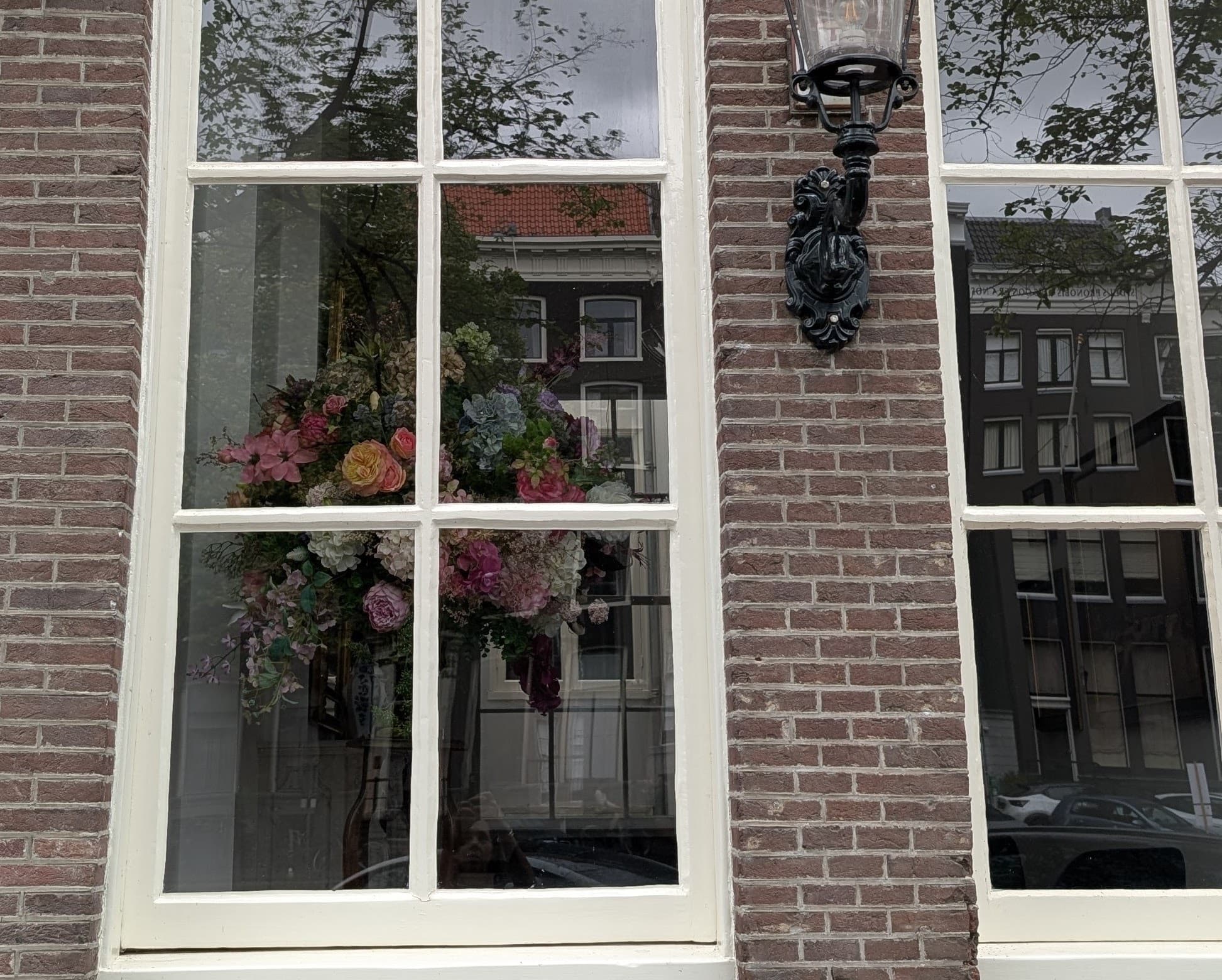
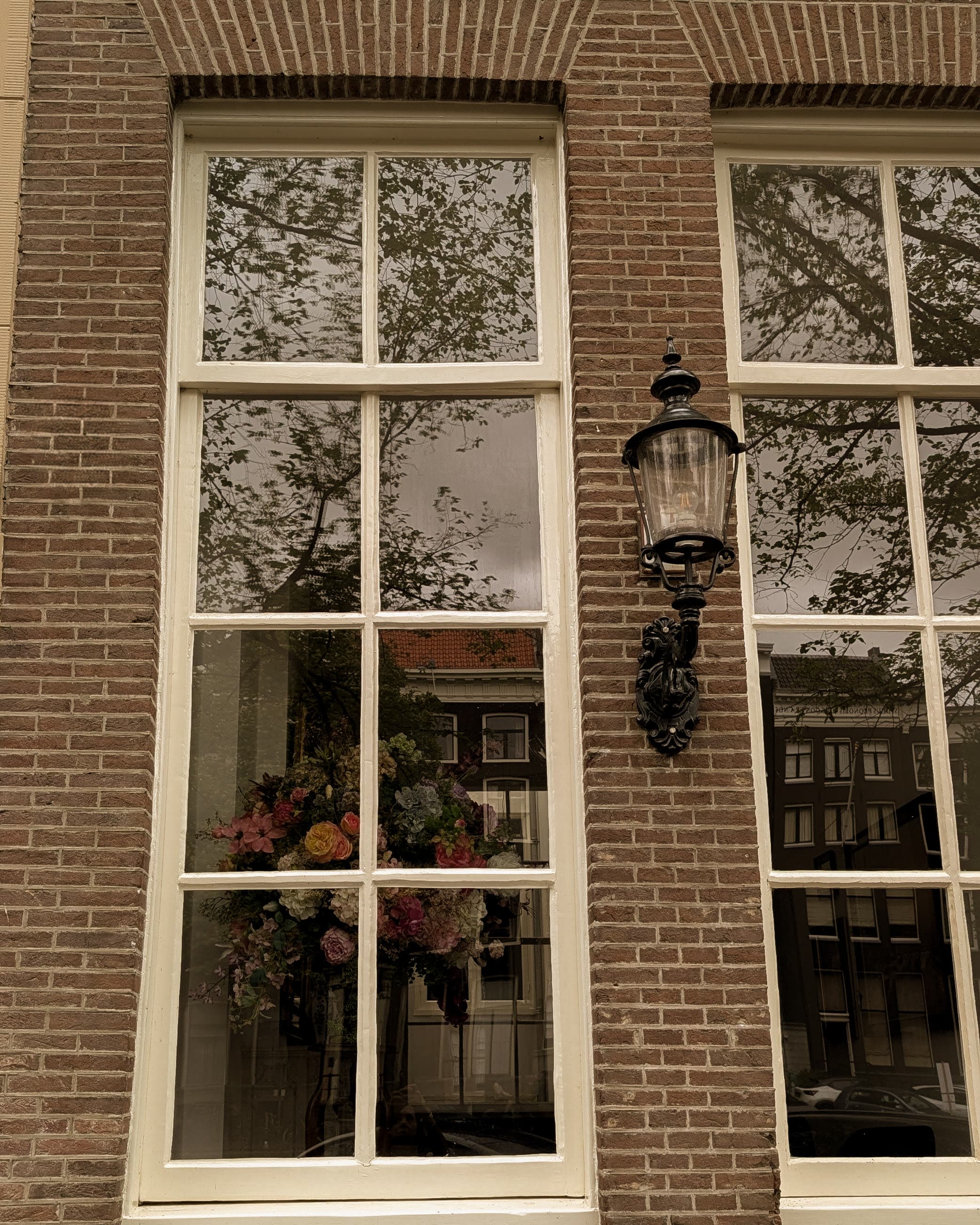
Cycle any canal at dusk and the houses give themselves away. The Dutch leave their curtains open, so every front room becomes a small exhibition: a lamp, a stack of books, an arrangement set where the light lands.
I grew up with this and stopped seeing it. This visit I looked properly, and what struck me was not the openness. It was that so many of the arrangements in those windows will look identical next February.
The painters four centuries ago wanted a bouquet that held every season at once and did not fall apart by Thursday. The windows want the same thing. The medium changed. The instinct did not.
Nobody I visited treated it as a compromise. One friend called it the sensible option, in the tone you would use about good insulation.
What Amsterdam taught me
The flower capital of the world earned its title twice. Once by growing flowers. Once by keeping them. The still lifes, the wallpaper, the windows, the blue canvas painted for a newborn: four centuries of the same instinct.
The Dutch never chose between loving flowers and holding on to them. They kept finding new ways to do both. Silk and Real Touch are simply the newest way.
That instinct is what Atelier Bloem brings to Los Angeles. Not materials from the Netherlands, but a way of seeing that was formed there.
The Atelier Bloem Journal. Next city, same question.
Atelier Bloem creates forever florals in silk and Real Touch, composed in Los Angeles.
For placements, rentals, and trade inquiries, reach out at hello@atelierbloem.com.